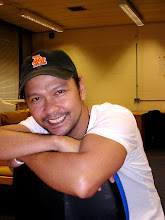
WHEN I FINALLY decided to settle permanently in Manila last 2011, I also returned to my old way of having a second job - parttime teaching at the university. Since 1994, my passion in teaching never fades, and still continues to grow, nurturing young minds to become successful in their chosen careers in Civil Engineering towards helping the Filipino nation a better community for the next generation.

In 1994, I started handling Urban Planning course at the Technological University of the Philippines (TUP). This is a 3-unit elective course for a postgraduate program in the Civil Engineering Department of the Graduate School. An average of 10-15 students of practicing civil engineers in the country enrolled every year, I enthusiastically impart to these professionals of what I have learned from my employment and postgraduate studies overseas. Being educated abroad is an advantage to students by sharing the academic experiences and knowledge gained from such international learning environment to a local setting.
For example, my preparation of class notes, examinations and project or research works deviate from the traditional way of what the normal teachers do in the country.

I do innovative ways to ensure that the students will learn more and appreciate my class, not only accomplishing the academic requirements to finish the course, but to learn more of the practical applications of the theories and principles of the subject taken. This is the main advantage of having part-time teachers in the university who have full-time work and at the same time teaching the subjects related to their employment. In other words, part-time teachers are not dependent on textbooks alone, but they are also sharing their professional experiences related to the subject being taught. Thus, they can explain further by providing examples through practical situations/cases for students to have better understanding of the topics discussed in the classroom.
IN 1999, I DECIDED TO join the faculty of RTU (Rizal Technological University), College of Engineering and Industrial Technology in Mandaluyong City. I am only handling minimal course units for Water Supply, Hydrology and Irrigation, and Environmental Engineering. Later on, through my qualification, the university got an approval from the higher education agency to offer Urban Planning in Civil Engineering degree.

FINALLY, after the completion of my PhD program in Northern Ireland (UK), I came back to the Philippines and I accepted to teach again in TUP and RTU. In addition to my previous subjects handled in the past years, I am currently assigned to work on two important tasks: thesis writing and supervision. Thesis writing is the final stage of the civil engineering degree towards graduation. This is the time when the students will finally work on their proposed research projects after these projects were already approved by the university. As part of the curriculum, I discuss the various aspects in writing a research project – from rationale to methodology, from results to assessment. I also emphasize the importance of proper referencing to avoid "plagiarism" which is considered as a serious criminal offense. Copying of other people's research works is against the law and sadly, it is rampant nowadays because of the internet connection. This requires utmost attention by the teachers to alleviate awareness among students at the early stage of their research projects.
IN PARTICULAR, graduating students have the opportunity to choose their own research topics, including their thesis/research adviser to supervise them during the conduct of their studies. These research projects are mostly related to: alternative building materials, innovative construction systems, development of software for structural analysis and design, maintenance and management of large infrastructures, hazard mitigation and infrastructure renewal related to natural disasters, urban and transportation planning, development of low-cost sustainable eco-materials for construction, and many other relevant civil engineering subject matters.
FORTUNATELY, I was able to supervise three successful projects in my first year of handling undergraduate research works, namely:
(a) Archiving of theses for an Electro-Net Access (ATHENA)
(b) An Empirical Study of the Efficacy of Mixed-Use Buildings in Metro Manila, and
(c) Awareness on Solid Waste Management Programs at the Barangay Level in Selected Local Government Units in Metro Manila.
Briefly, the first project aimed to develop a database management system for undergraduate theses submitted at the Civil Engineering Department. Consequently, it came up with a program in archiving of these theses (109 as of March 2013) for easy access. As of August 2013, there were 17 additional theses submitted to the department. The second project emphasized on the effectiveness of a mixed-use development in MM, highlighting the responses from the tenants, owners and customers of the various uses within the building in terms of amenities, convenience, parking, building management, and diverse of products and services within the mixed-use structure. The third project emphasized on the level of awareness of the barangay residents with regards to the various aspects of solid waste management programs implemented in the LGUs. Both the 2nd and 3rd research projects chose case studies for assessment.
I DO BELIEVE THAT this simple way of sharing my expertise to the academic community is something that I could be proud of. Through my interactions with my students (almost 150 students every term), I get extra motivations to work hard in my regular job and in return, to be more effective in teaching the courses that I am handling every term. Being a teacher is not an easy job. It requires dedication or I call it, "passion" to enjoy what I am sharing to my students. Yes indeed, to feel "good" and "fulfilled" when you find out that these young minds become successful and responsible individuals in our society. I continuously learning from my teaching experience and I do feel that more invaluable things to gain from this part-time work at the university in the coming years!
(Note: Part Two will cover the specific outcomes of the research projects that I handled, including some of the theses that I was part of the panel during the thesis oral examination/defense).