About Me
- Reymos
- Belfast, Northern Ireland, Manila, Philippines, United Kingdom
- Very simple person with a simple plan in life. A registered Philippine civil engineer, an urban/environmental planner, a lecturer/tutor; plays badminton, loves to swim, sing and dance; has the passion in drawing, writing reviews/poems and reading, and a photo enthusiast.
Friday, 15 October 2010
Blog Action Day 2010: Water - Fuel of the future
FOR THE FOURTH TIME, I AM joining again the Blog Action Day. For this year, the theme is water which is very influential in my professional life. Briefly, because of this element, water paved the way to be successful in my career in environment specifically in water/wastewater treatment and waste management. Aside from my work in environmental consulting, I also do a teaching job which handles courses/modules related to water (i.e. collection, supply, distribution, treatment, etc.).
No need to emphasize the significance and importance of water but I just want to share some important facts and figures about the role being played by water in our society today. Gathered by the organizer of Blog Action Day, there are alarming situations and statistics that need to be addressed and require immediate solution towards a sustainable supply of water.
In terms of scarcity of clean water, almost 1 billion people have lack access to clean water, consequently causes a litany of struggles, diseases and death. For African women, it requires them to walk over 40 billion hours each year to carry cisterns weighing up to 18 kg to collect water. Every week, nearly 38,000 children under the age of 5 die resulted from unclean, unsafe drinking water and unhygienic living environment.
In terms of water consumption in industrialized and developed countries, it takes 24 liters of water to make one hamburger, thus it means that over 19.9 billion liters of water will be consumed to make one hamburger for every person in Europe. It requires half a liter of water to charge iPhones and this means that 40 millions of liters of water to charge over 80 million active iPhones in the world. In terms of fashion, it requires 1,514 liters of water to produce a cotton t-shirt and another 6,813 liters for jeans.
For bottled water consumption, the US, Mexico and China consumed the highest number of bottled water - drinking an average of 200 bottles of water per person each year. To produce these water bottles, it requires over 17 million barrels of oil and 86 percent of these bottles can not be recycled.
In relation to water and the environment, the statistics are quite alarming! It is estimated that 2 million tons of human waste are disposed or dumped in water sources every day which caused negative impacts to the environment, the surrounding communities in particular. It costs $12.8 billion per year caused from death and disease from polluted coastal waters. It is also estimated that 40% of US rivers and 46% of US lakes are not suitable for fishing, swimming, or aquatic life.
DESPITE OF THESE CURRENT PROBLEMS, THERE ARE existing organizations and agencies that are working together to provide solutions and immediate remedies in combating water shortage and water pollution. These organizations' initiatives also provide tools and strategies to empower affected people to contribute to solve the water crisis. For example, there are organizations that build wells to bring fresh water to the communities in the developing countries. Even at home, we can do our share by saving water in terms of washing our clothes, dishes, watering our plants or cleaning our cars. We can also maintain the cleanliness of our water bodies (beaches, rivers, streams, creeks) by proper disposal of our household wastes. Finally, through our blogging activities we can even increase the awareness of our readers in protecting, conserving and sustaining our water resource.
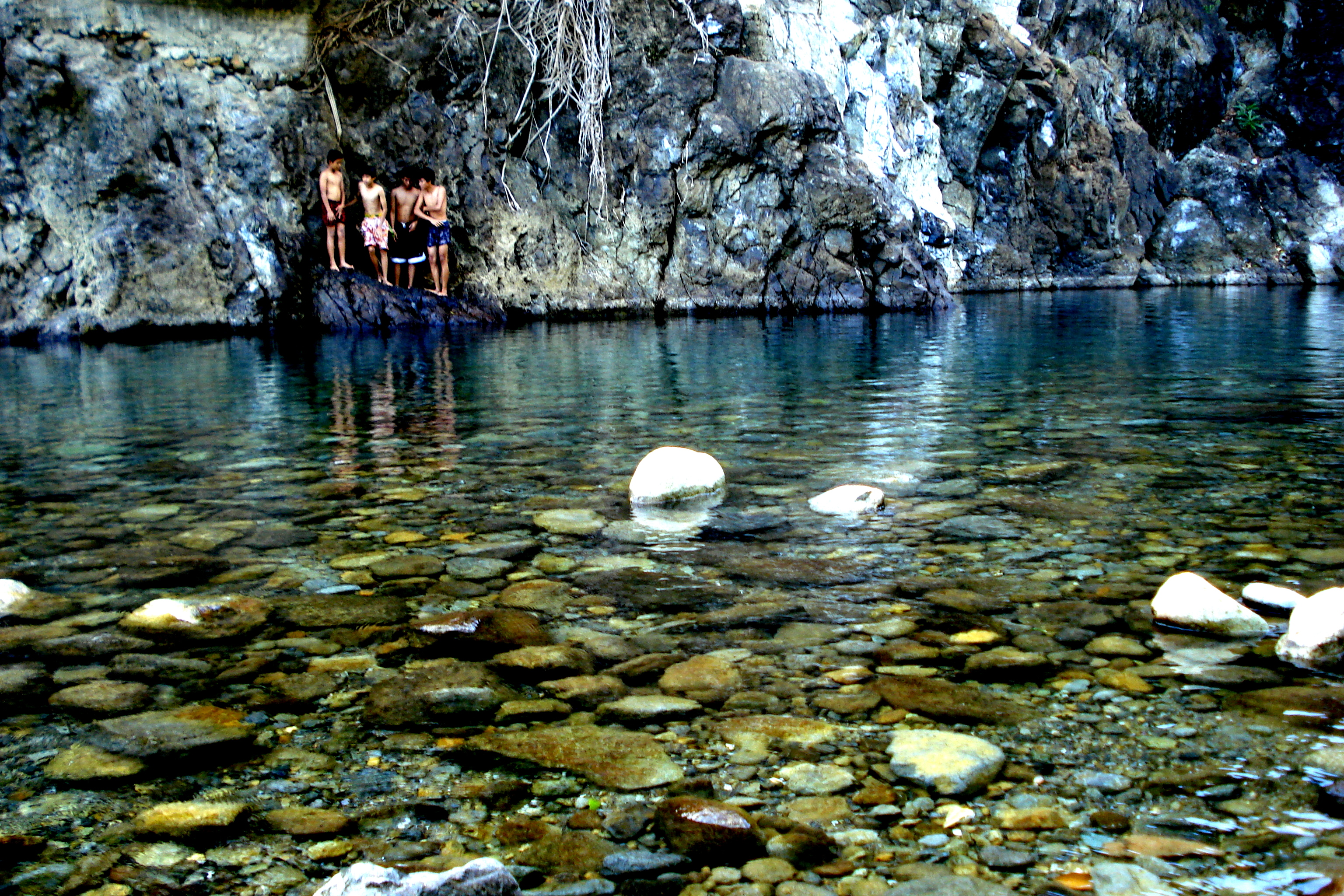
THIS YEAR, I ALSO WANT TO SHARE MY INTEREST IN PHOTOGRAPHY and emphasize the beauty of our environment, where WATER is dominant and provide the perfect landscape of our natural environment. With my traveling experience, I do appreciate the essence of water in our daily lives and to other living organisms - from plants to animals, from whales to planktons! These images posted in this journal somehow illustrate the WATER plays an important role for our Mother Earth to survive. Without water, no living organisms will survive, thus it is our responsibility to protect it from further degradation and abuse. Our generation has the power to protect, conserve and sustain WATER resource!
By the way, Im also a supporter of Social Vibe through the partnership of Wordpress.Com which I currently support a charity that promote access to clean water. To date I've earned 1643 gallons of clean water! You can try to contribute by clicking the widget of Social Vibe located at the right hand sidebar of my mother website, My world is getting smaller every day.
If you are interested to find more of my previous posts concerning Blog Action Day events, please click the following links: BLOG ACTION DAY 2009, BLOG ACTION DAY 2008, and BLOG ACTION DAY 2007.
No need to emphasize the significance and importance of water but I just want to share some important facts and figures about the role being played by water in our society today. Gathered by the organizer of Blog Action Day, there are alarming situations and statistics that need to be addressed and require immediate solution towards a sustainable supply of water.
In terms of scarcity of clean water, almost 1 billion people have lack access to clean water, consequently causes a litany of struggles, diseases and death. For African women, it requires them to walk over 40 billion hours each year to carry cisterns weighing up to 18 kg to collect water. Every week, nearly 38,000 children under the age of 5 die resulted from unclean, unsafe drinking water and unhygienic living environment.
In terms of water consumption in industrialized and developed countries, it takes 24 liters of water to make one hamburger, thus it means that over 19.9 billion liters of water will be consumed to make one hamburger for every person in Europe. It requires half a liter of water to charge iPhones and this means that 40 millions of liters of water to charge over 80 million active iPhones in the world. In terms of fashion, it requires 1,514 liters of water to produce a cotton t-shirt and another 6,813 liters for jeans.
For bottled water consumption, the US, Mexico and China consumed the highest number of bottled water - drinking an average of 200 bottles of water per person each year. To produce these water bottles, it requires over 17 million barrels of oil and 86 percent of these bottles can not be recycled.
In relation to water and the environment, the statistics are quite alarming! It is estimated that 2 million tons of human waste are disposed or dumped in water sources every day which caused negative impacts to the environment, the surrounding communities in particular. It costs $12.8 billion per year caused from death and disease from polluted coastal waters. It is also estimated that 40% of US rivers and 46% of US lakes are not suitable for fishing, swimming, or aquatic life.
DESPITE OF THESE CURRENT PROBLEMS, THERE ARE existing organizations and agencies that are working together to provide solutions and immediate remedies in combating water shortage and water pollution. These organizations' initiatives also provide tools and strategies to empower affected people to contribute to solve the water crisis. For example, there are organizations that build wells to bring fresh water to the communities in the developing countries. Even at home, we can do our share by saving water in terms of washing our clothes, dishes, watering our plants or cleaning our cars. We can also maintain the cleanliness of our water bodies (beaches, rivers, streams, creeks) by proper disposal of our household wastes. Finally, through our blogging activities we can even increase the awareness of our readers in protecting, conserving and sustaining our water resource.
THIS YEAR, I ALSO WANT TO SHARE MY INTEREST IN PHOTOGRAPHY and emphasize the beauty of our environment, where WATER is dominant and provide the perfect landscape of our natural environment. With my traveling experience, I do appreciate the essence of water in our daily lives and to other living organisms - from plants to animals, from whales to planktons! These images posted in this journal somehow illustrate the WATER plays an important role for our Mother Earth to survive. Without water, no living organisms will survive, thus it is our responsibility to protect it from further degradation and abuse. Our generation has the power to protect, conserve and sustain WATER resource!
By the way, Im also a supporter of Social Vibe through the partnership of Wordpress.Com which I currently support a charity that promote access to clean water. To date I've earned 1643 gallons of clean water! You can try to contribute by clicking the widget of Social Vibe located at the right hand sidebar of my mother website, My world is getting smaller every day.
If you are interested to find more of my previous posts concerning Blog Action Day events, please click the following links: BLOG ACTION DAY 2009, BLOG ACTION DAY 2008, and BLOG ACTION DAY 2007.
Wednesday, 29 September 2010
Thursday, 17 December 2009
Environmental tweets for UN Climate Change Delegations
This is a simple way to be heard by our world leaders. Send your messages while they are still listening on the final day of the Climate Change conference in Copenhagen (Denmark)... Click the image/photo above to be directed straight to the site. CCCC is an ongoing two-weeks event where leaders from 192 countries convene to discuss an overrated environmental problem, Climate Change.Climate change is a 100-year problem we should not try to fix it in 10 years. (Cool it, Bjorn Lomborg)
Leaders of the world, there is so much time to do in so little time, so when you make this choice think about the world and how it should end. (Marcos Fernandez, Brazil)
Please expose the false science of global warming that was uncovered via emails sent by the scientists from the University of Anglia (Carlos A. USA)
Climate change is not an opportunity for profit. It is a call for developed nations to pay their historical ecologic debt. (Elysian Bukid, Philippines)
I do hope that the developing countries will get the fair financial deals in reducing the catastrophic effects of global warming (if this is really happening or this is a politically-created crisis). Truly, Im very skeptical about this environmental issue, but having this gathering might increase the awareness of the people to think about saving our Mother Earth's resources for the future's generations.
Monday, 2 November 2009
My Blogspherical World of Living...
My mother portal is changing...having a mega makeover!
It is getting better and you will be part of it!
Labels:
filipino blog,
filipino blogger,
pinoy blog,
pinoy blogger,
reymos
Sunday, 1 November 2009
A long and winding road of higher education abroad…
PURSUING HIGHER EDUCATION (POSTGRADUATE STUDIES) is not a priority option after finishing university degrees fifteen years ago. My mind set during my university life was that I want to finish my bachelor's degree and then find a good paying job! That was it… nothing really in my wildest dreams to pursue higher education or postgraduate programs to be more competitive in the professional world of engineering. Aiming to get higher education abroad or overseas is another thing that absolutely not in my plan during those university years, except that I want to travel abroad either to work or just plainly for tourism purposes.I was a working student (after I completed by 3-year Civil Technology diploma) while pursuing my BS Civil Engineering degree. It was tough having a full time 8-5 work and 4 hours of studying 6 days a week. Coupled by living alone (boarding house) and maintaining high marks in all my subjects/modules, it was not an ideal life for a young man compared to what the young generations are enjoying nowadays. But no regrets at all! It was a great feeling to earn a living and for having an enjoyable lifestyle not dependent from my family. Coming from a poor family in the central part of the
Why Abroad? Well, one of my professors in college advised me to pursue postgraduate program overseas. I don’t know why he persuaded me but I think he was convinced that I could make it and be a successful professional someday. No doubt, he was right then! Honestly, I could not afford and manage to pursue my postgraduate programs in the
The requirements for the application were also tough to comply but having a strong determination and faith I managed to get three (3) scholarship grants: Master's degree in Urban Planning at the Asian Institute of Technology (Thailand) in 1991; Master by Research (MPhil) in Environmental Engineering at the University of Queensland (Australia)in 2002, and PhD in Engineering (Built Environment) at the University of Ulster (Northern Ireland, UK) in 2005.
How did I manage to get scholarship grants? One of the main requirements for funding are the average grades from high school and in college. Since I was an honour student, it was not hard to meet this requirement. The second requirement is passing the minimum score for TOEFL or IELTS – the English proficiency level. Having English as our second language, it was not really difficult to meet the minimum requirement score. For example, IELTS is used by Australia and the UK to check the English proficiency of the applicants. In my case, I took it 3 times already and I got fair bands, except on the second attempt that I got a lowest score in writing (5) which was not really good! Thirdly, endorsements or recommendations from former professors/teachers and boss from work are another documents to support the application. Again, I did have good relationships with my bosses and teachers and seeking for recommendations from them was easy. Finally, it depends on the field of study – civil/environmental engineering (including planning and management) is one of the courses that always on the list for possible funding for applicants from the developing countries. Sometimes, working experience is a primary consideration especially applying for grants thru Philippine government-initiated (National Economic Development Authority, NEDA) application. By the way, age limit is also another issue especially for pursuing PhD programs in Japan, Germany and other European countries.
Getting a grant successfully is not an over-night affair. For example, I attempted 3 applications for Australian universities (1997, 1999 and 2001) but only in 2001 that I successfully able to get the grant from AusAID. On the other hand, my application for AIT (Asian Institute of Technology (Bangkok) was not difficult in some way that I was accepted in just a matter of 3 months. I was really excited for having accepted and this was my travel abroad for the first time. My PhD application's approval in the UK in 2005 was very fast which somehow affected my job and future plans. This was the only application that required a long-distance phone panel interview!
Why pursuing postgraduate overseas? My grandmother once commented when she was still alive that "why I have to go back to school?" after passing my Civil Engineering licensure exam. I explained to her that "it is free and I could travel abroad as well"! This is the easiest way to see the world and to prove that the globe is "flat"! You might disagree about this but I don’t want to explain it here. I don’t have any criticisms to pursue higher education in the Philippines but if the opportunity is there to have it abroad, then why not grab it! In my experience, taking postgrad programs abroad have more benefits than having it locally. Most of the time, the training is tougher (doing own research work) and it is the initial stage for having a successful career overseas getting high paying jobs. If you maintained (as a study leave) with your government employer, then you are obliged to go back to the Philippines serving for 2 years equivalent for one year of the study program. Part time employment is another opportunity while studying. Even though working while studying is stricter in some cases, generally you are allowed to work a maximum of 20 hours a week during school term and up to 40 hours a week during vacation. For example, while pursuing my PhD program in the UK, I was allowed to teach or tutor undergraduate students 3 times a week. Tutorial class is an extra hour for students to do additional lectures and guiding them while during their exercises/seatwork.
But honestly, my motivation why I decided to pursue PhD is because I observed in the Philippines that to get involved in big international funded projects (USAID, ADB, CIDA, World Bank, etc.), you should have a doctoral degree! One thing more, since I do part time teaching for both postgrad and undergrad students in the Philippines, I also planning to continue this and maybe someday could be working full time doing management job (like Dean or Head of School, who knows)…
Finally, the added value of studying abroad is the opportunity to travel! Carrying a student visa, it is not difficult to apply for tourist visas. For example, I had successful applications for tourist visas for US and Scandinavian countries, including Canada, and other countries in Europe. Having time to travel is somehow brings a balance in my academic life, including my blogging also helps me survive from living away from family and friends.
Downsides in pursuing Postgrad? Since my studies were fully funded, then I don’t have much problem financially and I can send some extra money back home to my family. I can save some money for my travels and to maintain my singleness lifestyle. I'm single so there's not much of a problem in terms of adjusting the new environment, but if I have a family, then this is another story! Im not sure if I could cope having a family while studying. I'm not saying here that having a family is a hindrance to pursue postgrad abroad, but it requires more of thinking to pursue or not!
If you planning to pursue it by own funding, then it is really a tough thing to do! You should have a secured funding to ensure a successful postgrad, otherwise you will not be able to finish it, unless your parents could extend their financial support. Having a parttime job while doing a postgrad is hardwork but if you could just have it on a fulltime basis, then you can concentrate and finish in a short period of time. For example, my scholarship package for my master's degree in Australia was worth more than 2.5 million pesos (including tuition fees, conference fees, accommodation and living allowances), while my PhD program was worth 4 million pesos. Thank you very much to my donor agencies! So, pursuing postgrad abroad entails a lot of money but in the long term, it is worth completing it!
Where to get financial supports? There are several options to get funding. From a developing country like the Philippines, international funding agencies always give substantial funds to encourage Filipinos to do further study abroad. For example, the National Economic Development Authority (Scholarship unit) is responsible for screening both government private applicants. With the easy access thru internet, visiting universities websites is another option to get scholarship funding directly from the institutions; including searching thru Embassies is a first try to seek grants. If you have friends who are currently studying or completed their studies abroad, this is another way to seek advice for possible assistantships. Click here for additional information in securing financial assistance/scholarships from various donor agencies and universities.
THERE IS NO SHORT-CUT FOR AIMING a higher education abroad. It is a long and winding journey with bumps along the way! But at the end, there is always a promising result that we could hang on to a brighter and fulfilling life ahead of us.

Subscribe to:
Posts (Atom)